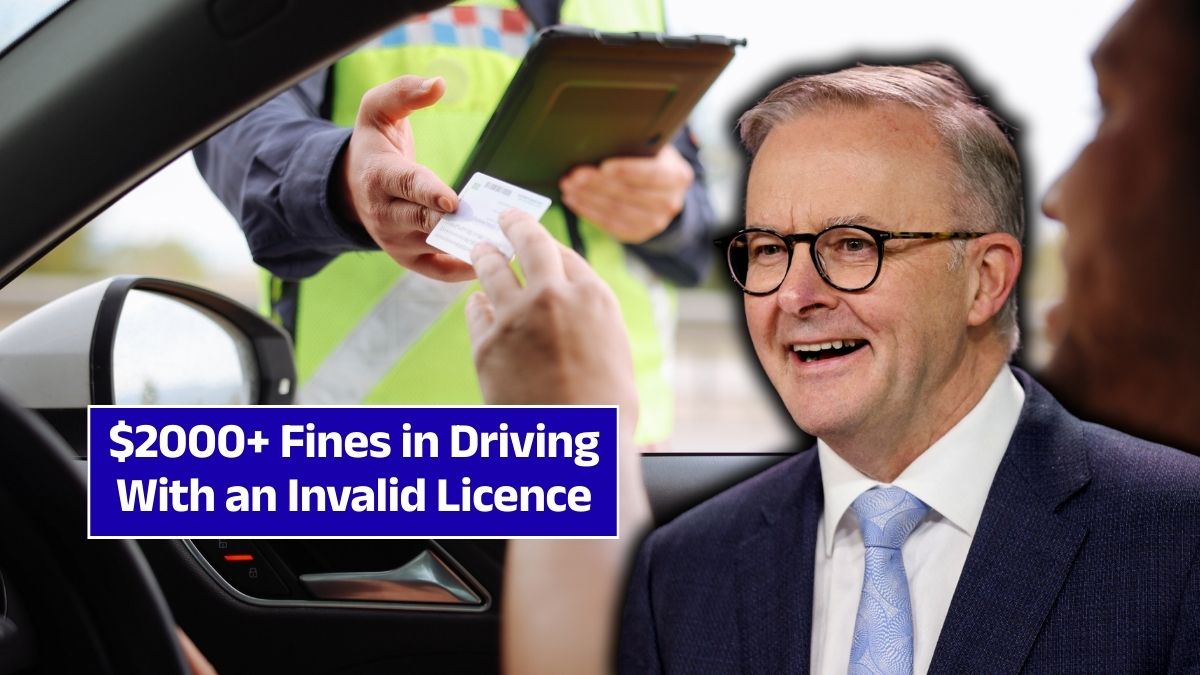
When Melbourne retiree John Matthews was pulled over during a random roadside check, he expected to be waved through. Instead, the officer told him his licence was invalid. It had expired during a medical review he assumed gave him extra time. “I wasn’t trying to break the law,” John said. “I just didn’t realise I was unlicensed.”
In 2026, cases like John’s are becoming alarmingly common across Australia. Authorities are warning that driving with an invalid licence can now cost motorists over $2,000 in fines, along with potential insurance losses, employment risks, and future licensing issues.
What Is Considered an “Invalid Licence” in 2026?
Most people associate an invalid licence with someone who’s never had one. But in reality, many Australians are falling into the category of “once valid, now lapsed”—often without knowing it.
A driver’s licence in 2026 may be deemed invalid if:
- It has expired, even by a day
- It is suspended or cancelled
- It is under medical review without formal approval to drive
- It has restrictions that are violated (e.g., driving at night without clearance)
- It wasn’t properly renewed after an interstate move
Police and road authorities treat all of the above scenarios as illegal, regardless of whether the driver was unaware.
Why the Penalties Can Be So Severe
Driving with an invalid licence isn’t just a bureaucratic slip-up—it’s treated as a serious road safety violation in most Australian states and territories.
Offenders may face:
- On-the-spot fines exceeding $1,000
- Court-imposed penalties above $2,000
- Additional legal costs if the matter proceeds to court
- Licence suspension or disqualification periods
- Higher penalties for repeat offences or if an accident occurs
A senior traffic law analyst explained:
“Even if the lapse was accidental, driving without a valid licence is seen as a public safety risk. The fines reflect that seriousness.”
Why Seniors Are Disproportionately Affected
In 2026, older drivers, particularly those aged 75 and above, are among the most vulnerable.
They are required to:
- Renew their licences more frequently (often annually)
- Submit to mandatory medical or eyesight assessments
- Complete extra documentation before approval is granted
Many are caught out when a delayed doctor’s appointment or pending report leads to an expired licence. Crucially, there is often no grace period—driving even a day beyond expiry is illegal.
Medical Reviews Don’t Protect You From Penalties
One of the most common misconceptions in 2026 is that being “under medical review” gives a temporary licence extension. This is false.
Most state policies confirm:
- Medical reviews do not extend your licence automatically
- Driving is only allowed with written approval
- Delays from GPs or specialists do not pause expiry dates
Thousands of drivers—especially the elderly or chronically ill—find themselves in breach despite their intent to comply.
New Tech Means Faster Enforcement
The likelihood of being caught has increased significantly thanks to technology-driven policing.
Police and road authorities now use:
- Real-time licence databases
- Automatic Number Plate Recognition (ANPR)
- Cross-state data integrations
This means expired or suspended licences are flagged instantly during traffic stops—and in some cases, even without a stop, through surveillance networks.
Invalid Licence = Insurance Nightmare
Many Australians are unaware of the insurance consequences tied to an invalid licence.
If you’re in an accident while your licence is invalid:
- Your insurance may not cover the claim
- You could be personally liable for damages
- Costs can reach tens of thousands of dollars
- You risk policy cancellations or refusal for future cover
This can be devastating, particularly for retirees or low-income earners, who may lack the financial buffer to recover.
True Stories Highlight the Human Cost
- In New South Wales, 79-year-old Margaret Hill was fined after her licence expired during a delayed medical appointment.
“I thought I was still covered,” she said. “I wasn’t.”
- In Western Australia, delivery driver Samir Patel was caught driving with a suspended licence, linked to an unpaid fine he didn’t know impacted his status.
“The fine was bad,” Samir said. “But losing my job was worse.”
These stories are no longer rare—they reflect a broader issue affecting thousands each month.
Common Triggers for Unintended Licence Invalidity
According to state authorities, the most frequent causes of invalid licence status in 2026 include:
- Missing renewal deadlines
- Relying on assumed reminders from transport agencies
- Delays in medical paperwork
- Interstate moves without updating licence status
- Misunderstanding of licence conditions or restrictions
Unfortunately, none of these explanations usually reduce the penalty.
Comparison: Driving with Valid vs Invalid Licences
| Status | Legal Outcome |
|---|---|
| Valid Licence | Legal to drive |
| Expired Licence | Heavy fines |
| Under Medical Review | Illegal without approval |
| Suspended Licence | Likely court prosecution |
| Invalid + Accident | No insurance; high liability |
The line between compliance and costly mistake is thinner than ever before.
Government Justifies Tougher Penalties
Transport officials argue that the harsh penalties are necessary to uphold road safety.
A spokesperson from a major transport department stated:
“Driving without a valid licence undermines the safety of all road users. Our policies are designed to reflect the seriousness of that risk.”
However, senior advocacy organisations are calling for clearer communication, simplified renewal processes, and dedicated support for ageing drivers.
Steps Drivers Should Take Immediately
Experts urge all Australian drivers—especially seniors and interstate movers—to take proactive steps to avoid a costly slip-up.
Essential actions include:
- Check your licence expiry date today
- Book medical or vision assessments well in advance
- Don’t drive until you receive formal clearance after a review
- Stop driving immediately if your licence has lapsed
- Set multiple reminders across calendars, email, and mobile apps
One overlooked date could cost you your licence, job, or savings.
Can You Appeal a Fine? It’s Possible, But Rarely Successful
Drivers can appeal an invalid licence fine, but results are mixed.
Appeals may succeed if:
- There was a system error or incorrect records
- You can prove official approval to drive at the time
- Your licence was falsely marked as invalid
However, common defences like “I didn’t know” or “I was waiting for my doctor” typically fail in court.
5 FAQ Questions and Answers
1. What counts as an invalid licence in Australia in 2026?
A licence is considered invalid if it has expired, is suspended or cancelled, is under medical review without approval, violates its conditions, or wasn’t properly renewed after a state move.
2. How much can the fine be for driving with an invalid licence?
Fines can exceed $2,000, particularly if the offence goes to court or if it’s a repeat incident. On-the-spot fines are usually over $1,000.
3. Can seniors drive while under medical review?
No. Seniors must have written approval to drive. Being under medical review does not automatically extend the licence’s validity.
4. Does insurance cover accidents if the driver’s licence was invalid?
Often not. Many insurers deny coverage if the driver was unlicensed at the time of the accident. This can lead to personal financial liability.
5. Can drivers appeal a fine for driving with an invalid licence?
Yes, but appeals are rarely successful. Appeals may be considered if there was a system error, incorrect records, or you had formal driving authority at the time.